

It’s no secret that insurance policies are complex. And it can be daunting to read pages of unfamiliar terminology. But just because it’s daunting, it doesn’t mean you should push it under the rug until a loss occurs. Because by that time, it may be too late. Today, our return guest, Zach Baker, is simplifying property insurance policies. That way you’re armed with the knowledge to tailor your coverage to your exact needs. And you’ll know what you are and are not covered for before a loss occurs.
Zach holds 18 years of insurance experience and is the Director of Client Experience at National Real Estate Insurance Group. He heads the team that acts as the liaison between the client and the insurance carrier during the claims process.
Today, we’re talking about insurance policies, their framework, what people should be looking for, and how they should interpret it. Where do you want to start?
The first thing is just how important it is to know your policies. The insurance industry is written in a kind of standard way that makes sense for most people, but it doesn’t make sense for everyone, and it doesn’t fit everyone’s needs. So, this is all about understanding your policy, and what it does and doesn’t do for you, so that you can become empowered to ensure that it fits your needs. You don’t want to assume that the product you’ve purchased is fully comprehensive. You need to take that responsibility for yourself, understand your coverages and what it’s doing for you, and then you can take the power back to yourself to make sure that it fits. Your needs are not what the general industry needs are, because everyone’s different. Today, we’re going to kind of pull this apart a little bit, break it down, and help people understand the best way to review it.
What are the most important sections of the policy?
I mean, all of them technically, but I do understand that it’s a complex document. There’s a lot to it, which is kind of what you talked about at the beginning. We’ll talk about a few of the most important places that you want to be familiar and comfortable with.
The place I would recommend everyone start is the declarations page. Sometimes it’s called Evidence of Insurance or Proof of Coverage. There are different names for it, but they’re all a high-level recap of the coverages you purchase. It’ll have the property address, the coverage limits, the coverages you’ve purchased, and what your deductibles are. Some of them will include the valuation method and other things. It’s a helpful recap of what you’ve bought and what coverages are in place. So, you want to be familiar with that first and foremost to make sure that it meets your needs, especially if you haven’t changed insurance in a long time. Because the reality is, that what you said whenever you first set the policy is likely what’s still in place, and that may or may not fit what your current needs are. So, that’s the place you want to start.
And then in the body of the policy itself, there are a few important places, like Covered Property is a good one, and Covered Cause of Loss. There are also endorsements and conditions. They all do different things in the policy. That’s all within the pages and pages of language that are on your policy. And we can talk about those in more detail.
One thing that we’ll sometimes see on declarations pages are sublimits. Can you talk about those a little bit?
First, there are overall limits, which are the maximum amount that the policy will pay for a loss. Then there are sublimits, which are usually peril specific and they’re designed to help limit the exposure and keep insurance as affordable as possible. Some common ones are theft and vandalism sublimits. Or, a lot of times there are limits for jewelry and cash and tree removal, it just depends on the policy. All policies have them, but it really is to limit exposure and keep insurance affordable. It’s important to know which ones exist and what your sublimits are because you don’t want to be unintentionally self-insuring the amount over the sublimit. In other words, the loss may be covered, but if it’s limited, you still may have some exposure and it’s important to know what that exposure might be.
Let’s go through some of the additional sections people should be looking out for.
The next place I would look is the Covered Property section. That’s the property within that policy’s scope. Does it include contents? Does it include other structures? If you’ve got a service lines policy, what service lines are covered. If you have equipment breakdown, what equipment is covered? Every policy will tell you what property is specifically covered within that product.
Then, I would also look at your Covered Causes of Loss, which defines what perils are covered and when they are covered. This comes from the different forms and types of coverage you can purchase.
I can also mention endorsements and conditions. They adjust the policy and insurance responsibilities.
But Covered Property and Covered Cause of Loss are the two big ones that you want to become familiar with.
Let’s move into endorsements. What does that section look like and what can it tell the insured?
Property policies are just contracts that are pre-written, and endorsements just tailor that product either to an individual person or to an individual insurance company. They modify the base policy in some way. They add coverage, they remove coverage, and they modify it. Some policies have an endorsement that removes cosmetic hail damage to roofs and siding. Some policies have an endorsement that will adjust how tree removal and debris removal may be handled. You want to be familiar and comfortable with endorsements because they change coverage.
OK, let’s move into exclusions. What are those?
Exclusions are the removals of coverage on a policy. So, back when we were talking about Covered Cause of Loss, there are two primary types of Covered Cause of Loss forms you can purchase. There’s a more basic named peril form, which is a specific list of perils that are covered. If what happens to the property doesn’t fit that list of named perils, it’s likely not going to be covered. Then, you have more comprehensive or special form type products that are what they call open perils forms. Meaning, the cause of loss is covered unless it’s excluded from the policy.
So, exclusions will remove coverage usually for those open peril or special form type products. They’re usually looking to remove either exposures that are too big for an insurance company to cover, like nuclear damage or earthquakes. Or they’re looking to remove coverage for things that really are within the responsibility of the homeowner, like maintenance, mold, and things that progress over a period of time.
What are policy conditions?
Those are just the responsibilities of the insured to keep the contract valid. So again, insurance is a contract between the carrier and the insured. There are responsibilities of the insured to maintain the validity of that contract. Some of the common ones are you can’t materially misrepresent, basically, you can’t lie on an application or in a claim. Another one is that you must make the property available to be inspected by the insurance company after a claim so they can see how much damage there is. So, things like that, they’re just the responsibilities of the insured, either to make sure the claim is covered or that the policy is valid. It’s important to know what actions you, as the insured, are responsible for to make sure that the coverage is valid. You don’t want to unintentionally do something that may invalidate your claim, like making repairs before an adjuster inspects.
How can an insurer make a policy their own?
As I kind of mentioned at the beginning, policies are written for the majority of people. So, they’ll meet most people’s needs and are written in a standard way. But there’s some flexibility to make it your own. One of the big ones is the valuation method that you can select. That’s all about how the claim is paid, whether it’s replacement cost or actual cash value. The difference between the two is whether the depreciation is recoverable.
You can also make adjustments to the deductible. How much of the loss do you want to self-insure? Do you want to have a low deductible where the insurance company gets involved sooner? Or do you want to have a higher deductible where you will self-absorb a larger loss before you even get the insurance company involved?
Another one is the Cause of Loss form that we talked about. A more comprehensive coverage form comes at a higher price. But that is another way you can adjust the base policy to make it fit your needs.
Lastly, you have ancillary products you can purchase, like Flood, Service Line, or Equipment Breakdown coverage. This is a way you can tailor your policy to meet your needs outside of the standard property policy. You can buy products that will help you build whatever level of comprehensive coverage you want.
Is there anything else we should know about policies?
If you understand what property is covered for what causes of loss, you feel comfortable with replacement costs or actual cash value, and you know your deductible, you’re already ahead of most people.
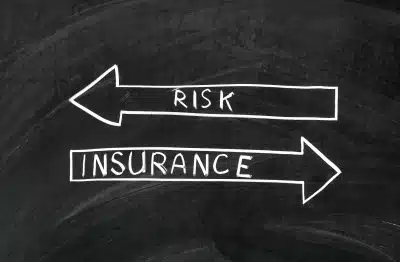
Insurance is about risk transfer. What risks are you keeping for yourself? And what risks are you transferring to the insurance company? Make those decisions for yourself because you don’t want to leave that up to somebody else to make those choices for you.
It’s also good to know in the event of a claim. Because if something happens, you don’t want to be caught not knowing what it is that you’re insured for and then scrambling. Most people that are frustrated when they have a claim is because they had a misunderstanding of what risk they had transferred and what risk they had retained.
— Game Segment: Five Most Common Property Claims —
We’re going to see if you can guess the top five most common property claims. These calculations are from the Insurance Information Institute based on the data from homeowners’ insurance claims from 2017 to 2021. They do not include add-on coverages like flood.
- Wind and hail
- Water damage and freezing
- Fire and lightning
- Theft
- Lawsuits for bodily injury or property damage that the policyholder or family members cause to others.
Watch or listen to the full interview here!